bookmark_borderEboshi Experiments 2026

I finally ran out of the mesh material that I have been using for making hikitate eboshi. I had bought maybe 5 yards of it back years ago, and it’s no surprise that eventually I’d use the last bit for something. Anyway, this happened back in December when I went to make a hikitate eboshi for a friend who was being elevated to the Order of the Mark. Sweetie was able to order a new roll of a new kind of mesh and I wanted to experiment with it.

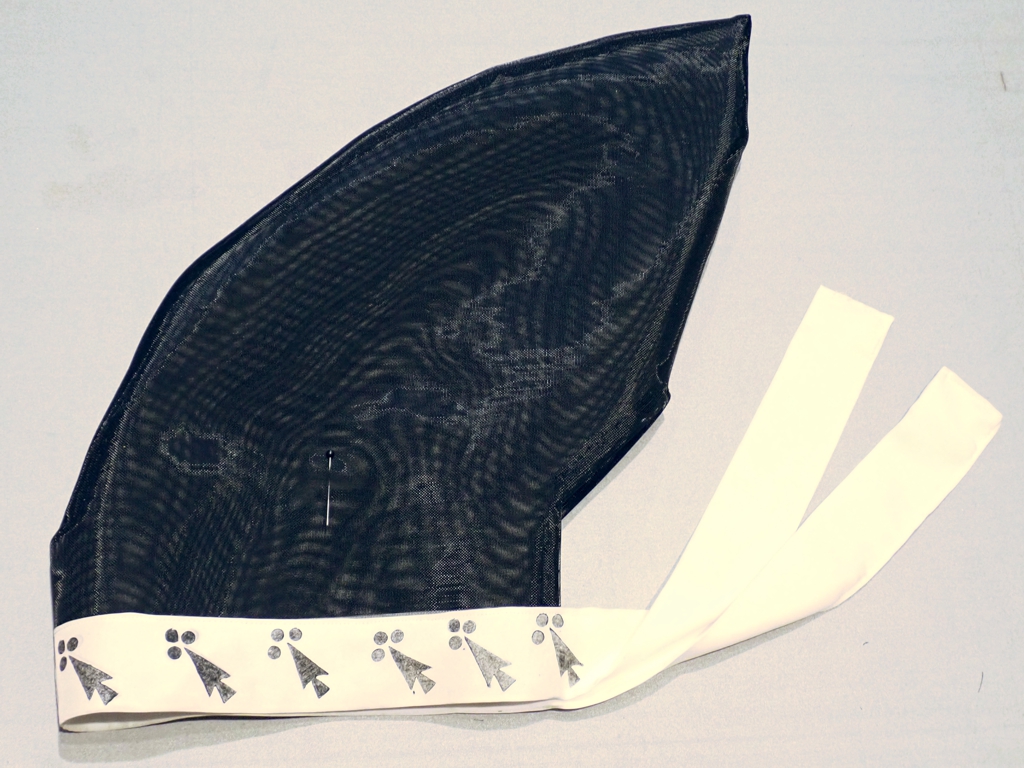
Hikitate Eboshi from Nylon Mesh

This one is just a tall “pulled” eboshi using the latest version of my sewing pattern. I levae them very open at the back now, so they can accommodate a variety of head sizes. The band is white linen.

Ori Eboshi from Nylon Mesh

I made four of these total, since I was pleased with how they came out and I know they will be useful as gifts. This is a “folded”eboshi using a brand new pattern. I’ve never really made any of these before. The shape is basically just a tate eboshi, but it’s folded once to the right, then back to the left. When you tie it dow like here, it gets its distinctive “samurai eboshi” shape. The band is black linen, with interfacing inside for comfort. There is a cord inside the band across the back, which can be tightened or loosened to change the size.

Tate Eboshi from Nylon Mesh

So this last one is kind of special. I’ve tried making these before, with limited success, but I like how this one came out. It’s a mid-height tate eboshi with the expected “face” in the front. It is also adjustable using the cord at the back of the band. The band itself is linen, with interfacing for stiffness. I left large seam allowances at the top, then sewed them open to give the top a more rounded shape and provide more overall body to the eboshi. This is more of an “out and about” eboshi, not as formal as the other two or as specialty as the samurai eboshi.

I’m very happy with this new mesh. I has a more “woven fabric” look and less of a “window screen” look to it. It is also slightly lighter and easier to work with. I also like how is has just a little bit of glossy sparkle to simulate lacquering. Thank you very much, B&J Fabrics for sending me some swatches so that I could pick the one I liked best.
bookmark_borderElevation Items

Our friend Kusunoki Yoshimoto (or “Yoshi” as we call him) who lives in the East Kingdom of the SCA, received a writ for the Order of the Pelican. He’s a pretty good friend of ours, and we camp right next to him at Pennsic. He made Sharon’s crossbow and her first set of bolts, and he helped her figure out the best shooting style for her. He does a lot of service to the archery community in the East and elsewhere, and it was really good to see him recognized.

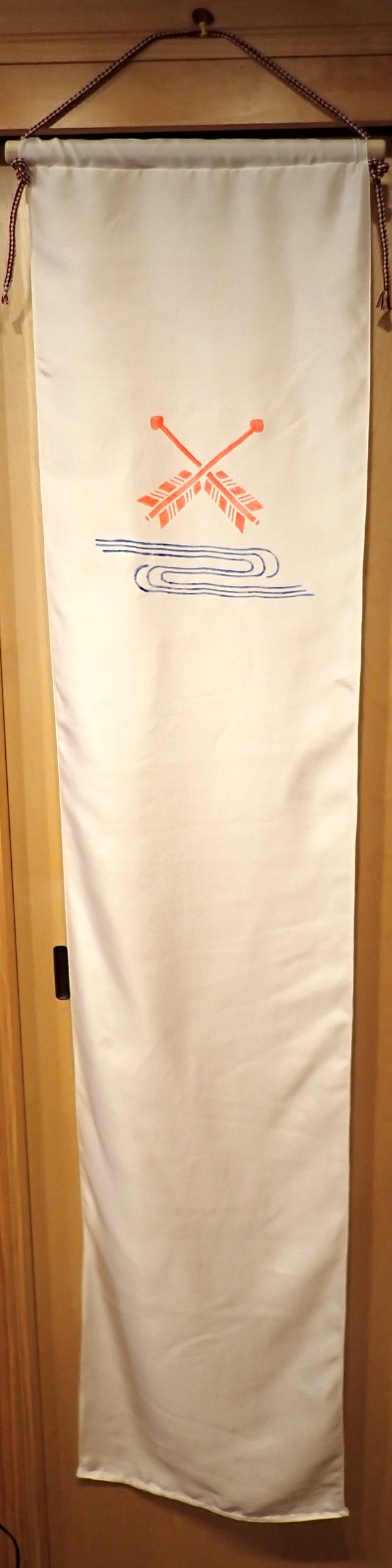
We were tapped to create a few items for his elevation. Sharon made his elevation garb, which was a full hitatare sugata including undergarments, and his “Pelican Cloak” which was styled as a dobuku coat. I wound up making a silk hata-jirushi banner with his heraldry and his “Cap of Maintenance” which was styled as a hikitate eboshi with ermine spots block-printed on the band.

Silk Banner with Yoshi’s Device
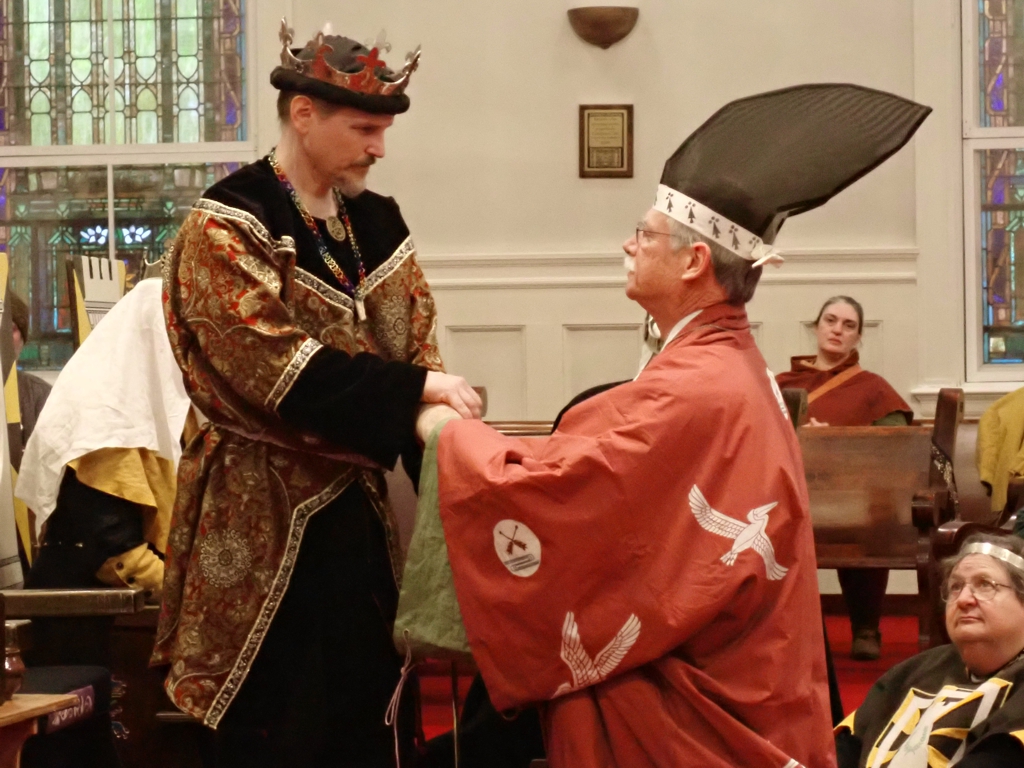
Eboshi of Maintenance

The eboshi was so tall, the King had to stand on a bench to get Yoshi’s Pelican medallion around his neck!

Here is what everything looked like in action:

Yoshi in Vigil, with Banners
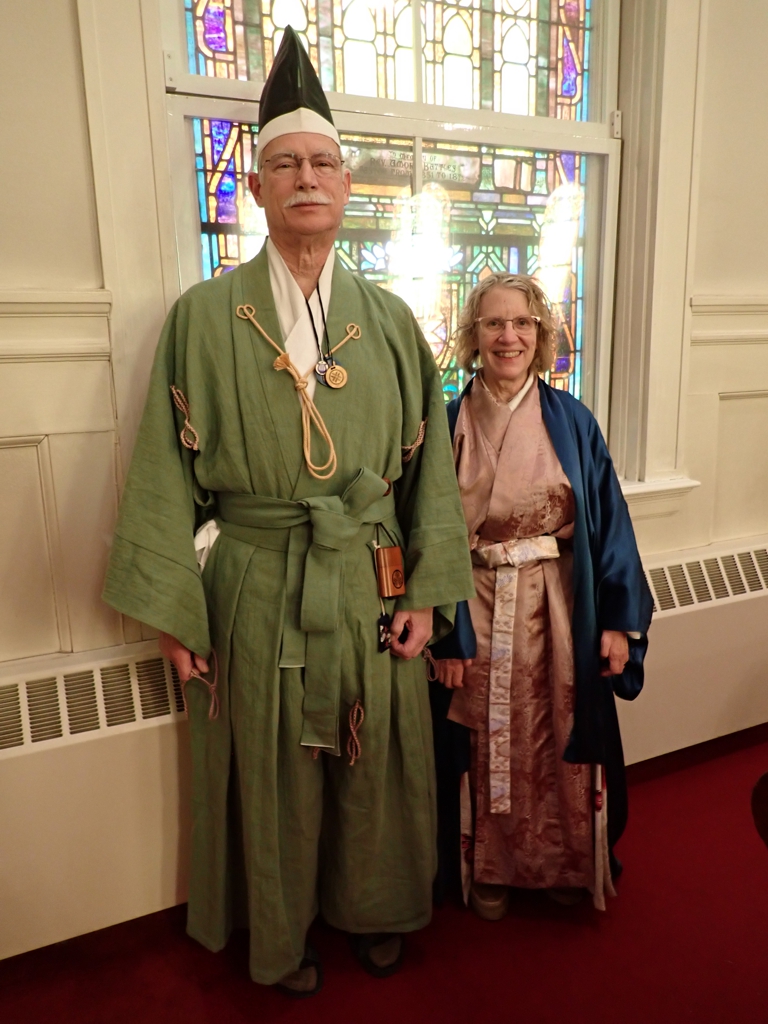
Yoshi and Hara in their Pre-Elevation Garb
(Braided embellishments by Forveleth Dundee)
Yoshi During the Elevation
(Printed fabric designed by Morikawa Rei)

It was a wonderful event, and a great elevation. We were so happy for Yoshi’s elevation to the peerage, and to have our work be a part of it. Travel to Bangor, Maine and back was a terrible experience, but the day itself was wonderful.

bookmark_borderBlack Band Eboshi

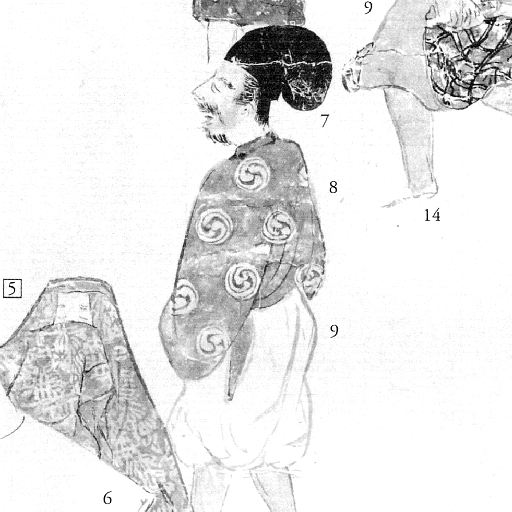
I have made dozens of eboshi over the years, both for myself and other people. One thing has always kind of bothered me about my eboshi, though. I tend to put a white headband on my eboshi because it is mostly what people are expecting, but many of the eboshi you see in historical illustrations do not have these white bands. Here, for instance, is an illustration from the Kitano Tenjin Engi emaki:

#7 indicates nae-eboshi

I picked this illustration because it is a fairly accurate portrait of me. You can see that the nae-eboshi in that image does not have a white band, but is all black. Quite simple to make a couple of eboshi using black fabric for the band instead of white.

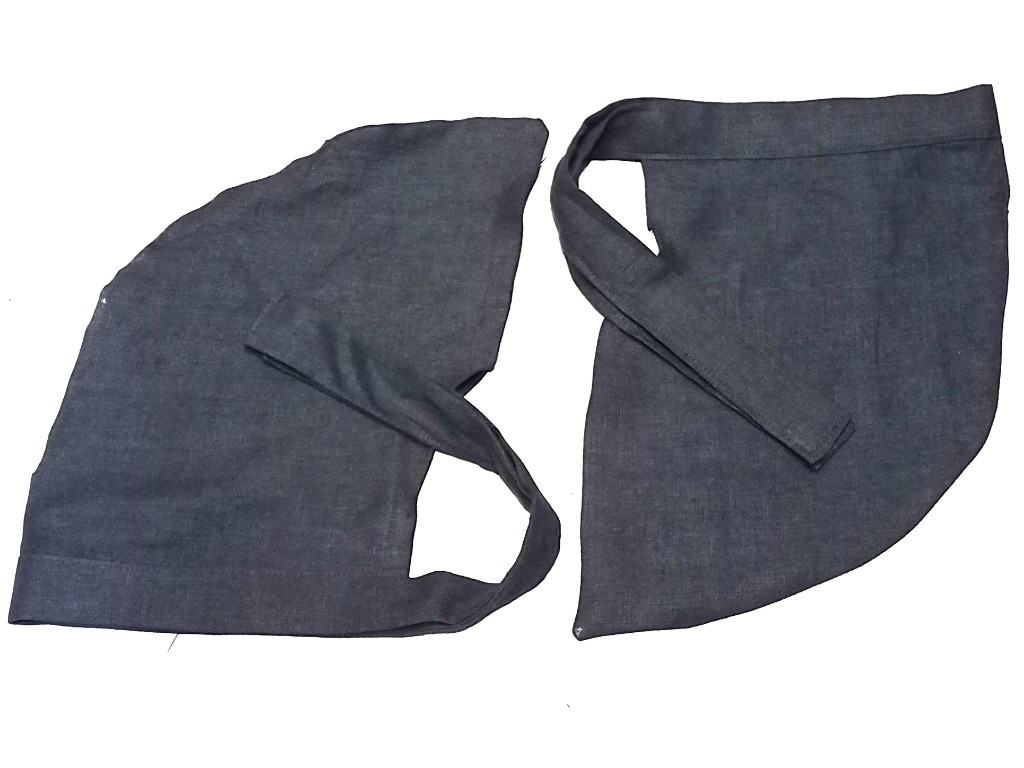
Black Band Nae-eboshi

You will probably notice that the eboshi in the illustration is less pointy at the top than mine, and also does not have the long fabric ties that hang down in the back. I have some theories about that, but one change at a time, folks.

bookmark_borderEboshi for Gwen

I neglected to post about this at the time, but back in March when we were getting ready for my sweetie’s elevation, I made three more eboshi for our friend Gwen.

Of course, Gwen has been camping with Kaminari for years and has several eboshi, but nothing deemed nice enough to wear while heralding an elevation. So, I made three more for them. One floppy nae eboshi, one linen tate eboshi lined with heavy interfacing, and one mesh tate eboshi for summer wear. The mesh eboshi has a silk band for the extra-fancy.

bookmark_borderRoyal Eboshi

My sweetie made some fancy Japanese garb for the current Sovereign and Consort of our SCA Kingdom. She did all the work on both outfits except for one part. Eboshi are kind of my thing, so she let me make eboshi to go with his outfit.

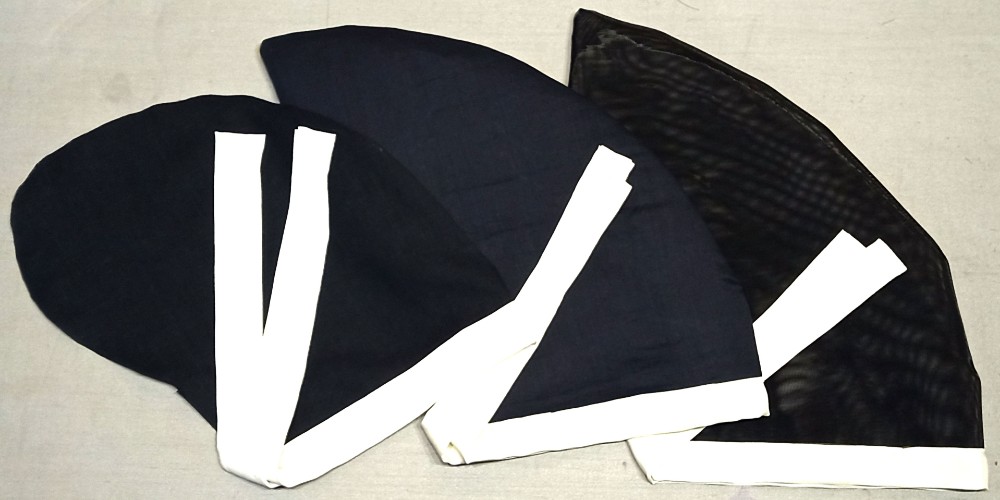
Three Eboshi for King Arnthor

From left to right there is a soft linen nae eboshi, a tall linen hikitate eboshi, and a tall mesh hikitate eboshi. So far, I think I have only seen him wear the mesh one, but I think it is always good to have options. Here’s what the completed outfits look like:

These outfits probably would look awesome even without a hat, but the eboshi really sets the mood, I think.

bookmark_borderSCA Portrait

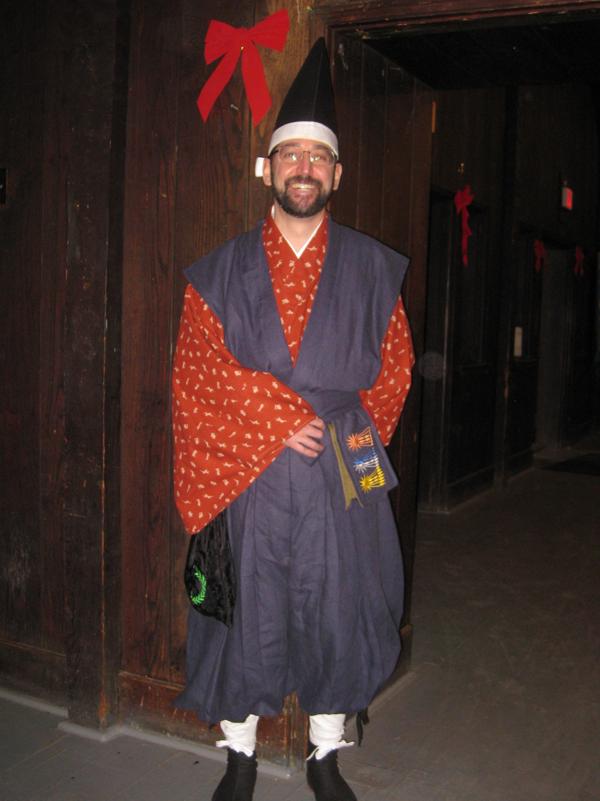
Here’s a picture of me from our Baronial 12th Night event wearing a Kataginu Kamishimo of mostly new-for-2020 garb.

Kataginu Kamishimo in blue linen

I’m wearing a kataginu vest and hakama pants in matching blue linen, printed cotton kosode, white linen kosode, white linen kyahan shin covers, black linen tate eboshi hat, and purchased jika tabi shoes. Sagemono belt-hangers are a belt favor of the three baronial orders to which I have been inducted (Order of Copernicus, Order of the Blue/Silver Comet, Order of the Gold Comet) and a kinchaku made from the same black silk brocade as my elevation garb which has been machine embroidered with a Laurel wreath.