bookmark_borderPeace Braids

Last week, we attended the “Armistice” event up at Cooper’s Lake Campground. Informally called “Pretendsic”, this was the event that the campground decided to run on their own after the SCA’s Pennsic War was cancelled again. It was a much smaller and informal version of a war, with no organized battles and many fewer classes. We did not even camp up there most nights, and brought all our own food. We spent a lot of time in camp braiding, and I completed these four braids.

Four Kute-Uchi Braids from Armistice

All four braids were made using kute-uchi hand-loop braiding. The two inner braids are Mitake-gumi 10-loop rectangular braids, both using a single ply of acrylic yarn for each loop. The two outer braids are Maru-genji-gumi 16-loop round braids. The inner of the two uses a single ply of acrylic yarn for each loop, and the outer uses two plies of cotton crochet thread for each loop. To keep the loops together in bundles for the 2-ply braid, I used rope kute handles. These were all braided while seated on a bench, and I used my toes to beat the stitches if the braids were too long for manual tightening.

bookmark_borderPlain Cotton Shirts for Dyeing

At the most recent dyeing activity, one of our friends brought a few articles of finished clothing that she’d purchased inexpensively, specifically for the fun of shibori dyeing it in indigo. When you make up a couple of big pots of indigo dye, you might as well use them for as much as you can. They really don’t keep, and there’s so much dye in there that you can normally toss in some experiments at the end just to see how they come out.

Her experiments came out so awesome that I decided to copy her method. The online stores that sell the dye also carry a broad line of prepared for dyeing (PFD) garments, but I hate buying clothes mail order. I have plenty of simple sewing patterns, though.

Cotton Shirts for Dyeing

I used white muslin fabric to make two shirts. One uses a sweatshirt pattern, and the other uses the beloved pajama top pattern. No buttons on the pajama top yet, because they would only interfere with the dye. I finished all the cut edges with serging, but did all the top stitching with cotton thread. The cotton thread will take up dye, but the polyester serging will not. The serging is all hidden inside, though.

Somebody is running a dyeing day next month, so now I am ready for fun.

bookmark_borderIndigo Shibori Silk Kosode

A few weeks ago, Sharon hosted an indigo dyeing activity at our home. Some people came over and we spent all day dunking fabric in dye pots. I did some small test pieces for various techniques, but I also twisted up some big pieces of silk broadcloth, and then I made this kosode from that fabric.

It looks kind of like an accident in a bleach factory, but closer up the indigo patterns are very organic and Rorshach-inkblot fascinating.

bookmark_borderThrown Weapons Rank Favors

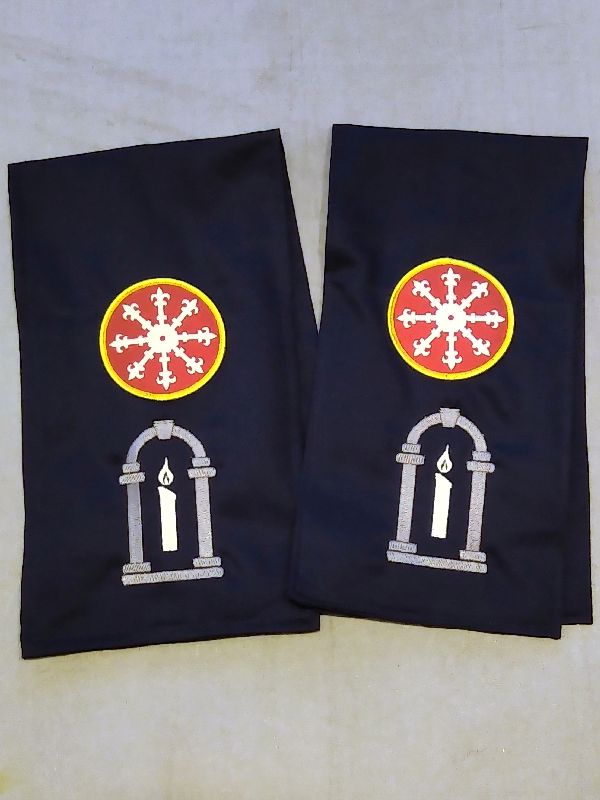
One of the martial activities in the SCA is called “Thrown Weapons”. Participants throw handled metal weapons such as axes and knives at fixed targets for scores. If you can achieve certain scores during a timed exercise, you qualify for different ranks. These belt favors are meant to be given to those participants who have achieved the required skill levels. The background color of each favor denotes the rank: black for Thrower (0-29 points), blue for Verfur (30-59 points), purple for Caster (60-79 points), green for Huntsman (80-99 points), and red for Marksman (100-120 points).

Each is machine embroidered on cotton twill fabric. The favors are about 7.5 inches wide and 18 inches long, meant to be doubled over a belt. The badge is 3.5 inches in diameter. The fabric is doubled over into a kind of bag, inside which valuables or authorization cards can be stored. I made six of each rank, thirty in all. Even though the machine did all the hard work, there was still a bunch f work setting things up, switching threads, and completing the favors. It took me a while.

bookmark_borderHappy Light Shoji Frame

Like many people, this winter was pretty bad for me. The isolation at home, the chaotic election, the violent attempt to overthrow a democratically elected government… I realize things were even worse for people who actually got sick, but the rest of us still had a lot to deal with. To help fight the depression, I bought one of those full spectrum lamps to at least help combat the winter blahs that are caused by lack of sunlight during the Winter. I think it helped, even if it was just the feeling that I was trying something new.

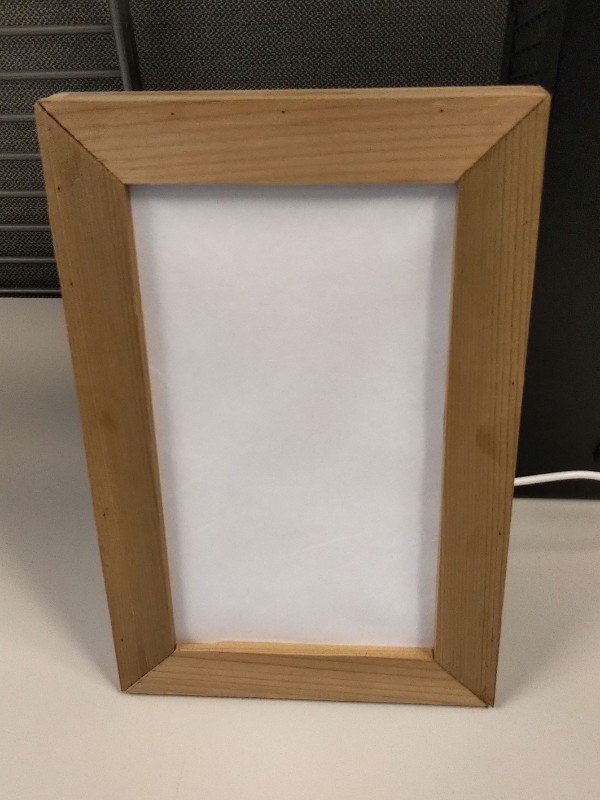
I bought a small-ish, flat-panel light that I could mount on the wall over my desk, or place off to the side on a table. It works great, and has a timer function so that I can chunk out my work day. The only problem is that its modern aesthetic clashes with my rustic Japanese decor preferences. So, I made a cedar “shoji” frame to disguise the lamp.

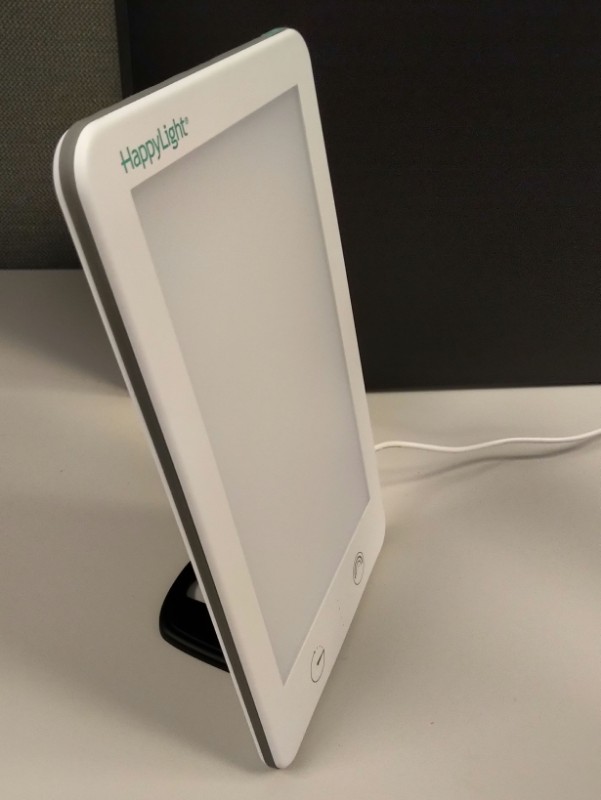
This is the lamp, a HappyLight from Verilux
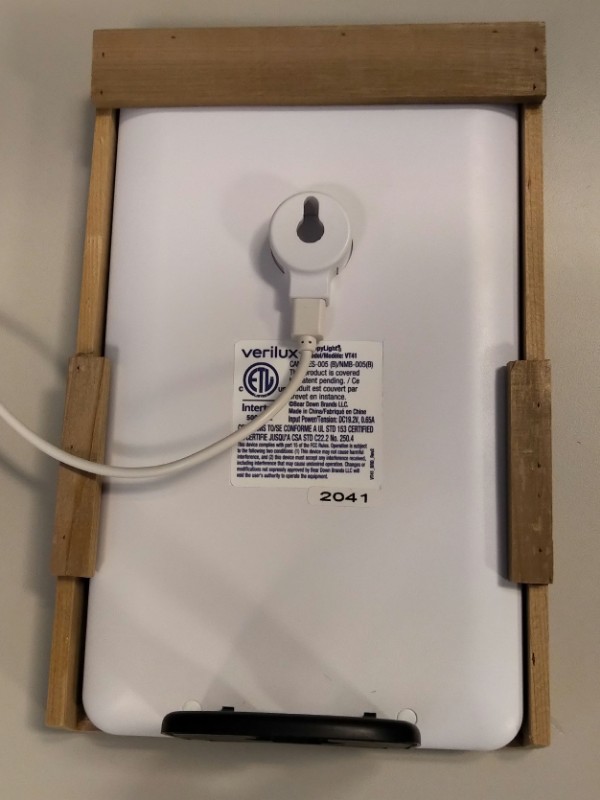
The cedar frame slides down over the lamp
The frame does not interfere with the wall hook, table stand, or power jack
From the front

I can’t show you what it looks like with the light on, because the lamp is so bright that you wouldn’t be able to see anything else in the photo besides the glowing rectangle. I am thinking of adding some kumiko lattice-work to the frame opening, but kumiko are so trendy right now that I don’t know if I can bring myself to do that. Honestly, if one more person responds to me saying “I do some Japanese-style woodworking.” with “Have you tried kumiko?” I may stop discussing woodworking entirely.

bookmark_borderKeyboard Booster for Work

I started a new job back in September, while the office was completely closed. I about reached the end of my work-from-home productivity rope this Spring, so I appealed to my boss to be allowed to start coming in to the office. It’s been a good move, productivity-wise, as I am able to focus on work much better when I am not in the same room with so much of my crafting equipment and materials.

One thing I was really missing about my home office though, was the ability to work while standing. At home, I had started putting the cedar stepstool up on the craftsman endtable, and using that assembly as a standing desk for my work laptop. In the office, I’m using a desktop computer with a full keyboard, and the stepstool is not wide enough to accommodate that and a mouse.

Luckily, I still had some finished pine shelves from the old house in the garage. I cut one of them up into pieces, joined the pieces with dowels and glue, reinforced the joins with some metal right-angle brackets, finished the cut ends of the pieces, and now I have a standing desk for work without having to appeal to the furniture gatekeepers for an expensive motorized desk.

Keyboard Booster at Work

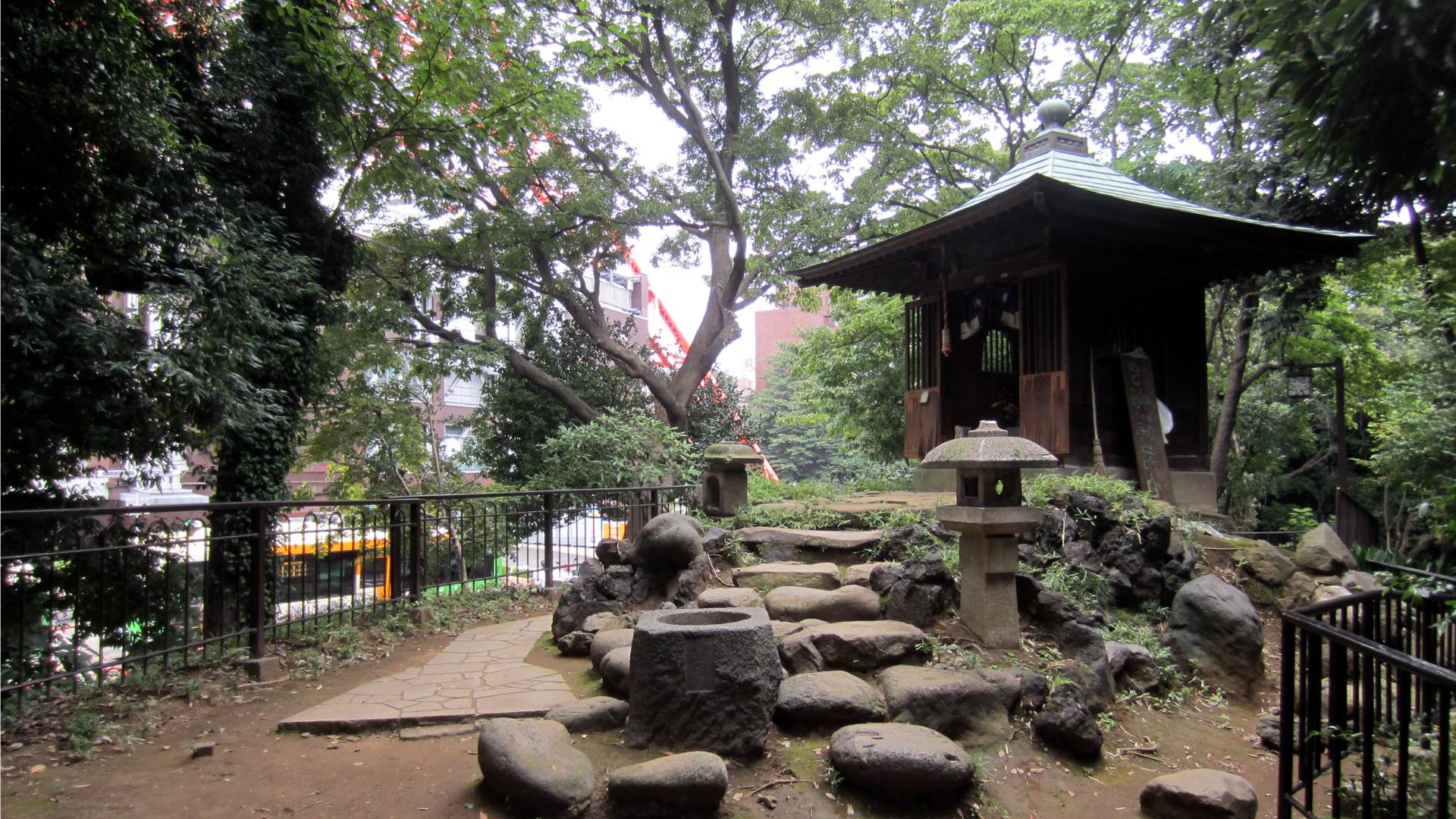
If you are interested in my ginchy custom desktop backgrounds, see the “Liberty Exit” and “Tokyo Maple Shrine” images in my Desktops Gallery.

bookmark_borderGiant Squid Brushwork

Choju squiga? A few weeks ago, there was a news story about a town in Japan that is attempting to kickstart tourism after the pandemic by installing a statue of a giant squid. Awesome, huh? I wanted to be able to use the image of the giant squid for my own purposes (porpoises?), so a quick trip to the paintbox later…

Giant Squid (01)
Giant Squid (02)

I’m happier with the tentacles on the second one, but I’m not completely happy with the shading on it.

bookmark_borderIndian Silk Kosode

Basically as soon as Sweetie and I had reached full immunity following our second COVID-19 inoculations (it’s not really a vaccine, you know), we went and visited my parents in NJ. They still live where I grew up in NJ, and although we did not want to go into NYC to visit fabric stores, I decided to search around the area to see what might have become available in the 30+ years since I left. Sure enough, the large presence of immigrants from Southeast Asia in my home town had resulted in some great fabric stores catering to their tastes, including one just 15 minutes from my parents’ house, called “Fabric Guy“. I was looking for some figured white silk for another project, but also wound up buying some of this lovely medium-weight silk brocade.

Close-up on the fabric

I suddenly decided that I needed a fancy kosode, because who doesn’t need a new fancy kosode every once in a while? One difficulty with the project is that the gold metallic threads for the flower buds (or whatever they are) are pretty much just behind those graphics. Cutting the fabric released hundreds of little whiskers, and I realized that wearing the kosode would break off more of those and they would get into everything else. The solution was to add a lining to the plan.

Open kosode, showing lining

I had some light-weight habotai silk in my stash, so I used that. I’ve made lined garments before, so this was not alien territory for me, but it has been a while. The trick, for those who don’t know it, is to leave closing the neckband for the very last step. That enables you to attach the sleeve linings to the body lining easily by pulling those seams to the outside of the garment. This silk was so light that keeping it still enough to sew was something of a challenge, but it came out OK, I think.

Indian Silk Kosode