

bookmark_borderFriday Catblogging

Longtime fans of my work will remember that I have taken some woodworking classes with Tadao Arimoto, a Japanese-born woodworker who has a studio in the Northside neighborhood of Pittsburgh. Every once in a while I will stop by his workshop to visit and get caught up, and sometimes when I am not working he will ask me to help out if he needs a couple of extra hands for something.
This past Monday, I helped him take apart a sushi bar that he built “years ago” for Sushi Kim down in the Strip district. I’ve eaten at Sushi Kim a few times in the past 30 years that I have been living here, and it’s a real shame to see it closing. Mr. Kim is going to open a smaller takeout place in North Oakland (314 North Craig Street), and he has sold the building to the Heinz History Center that is across the alleyway from the restaurant.
Anyway, these pieces were way too big for one person to move, and everything was held together by about a billion screws. Mr. Arimoto actually had two of us helping him, loading out all the trash, and moving the pieces of the sushi bar to his workshop where they will be reworked for the new place.
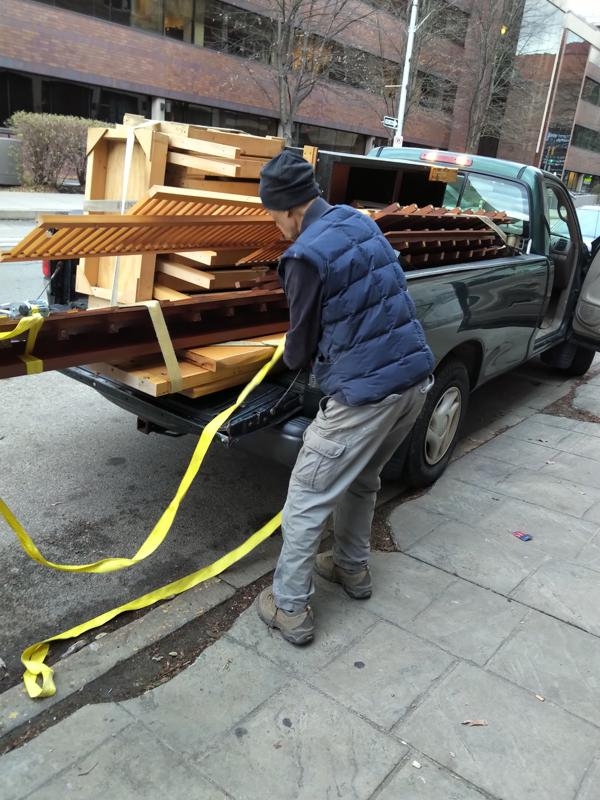
The bar itself, consisting of about 8 yards of 2-inch thick ash, is on the bottom of the pile there. It took us all day to get the bar pried out of place and moved to the workshop. This thing was solid enough to be used for 30 years, and then still strong enough that we could stand on it while taking some parts down from over the bar. It was a fun day, but I will admit that I sometimes have an odd sense of fun.
During my blogging hiatus, I also stopped obsessively documenting every last kumihimo braid that I do. Most of my braiding over the last 6.5 years has been making medallion cords for the local SCA Barony and Kingdom, and while this year was something of an exception (more on that when I get the chance), the last day of 2019 year was not. So here is the braid.
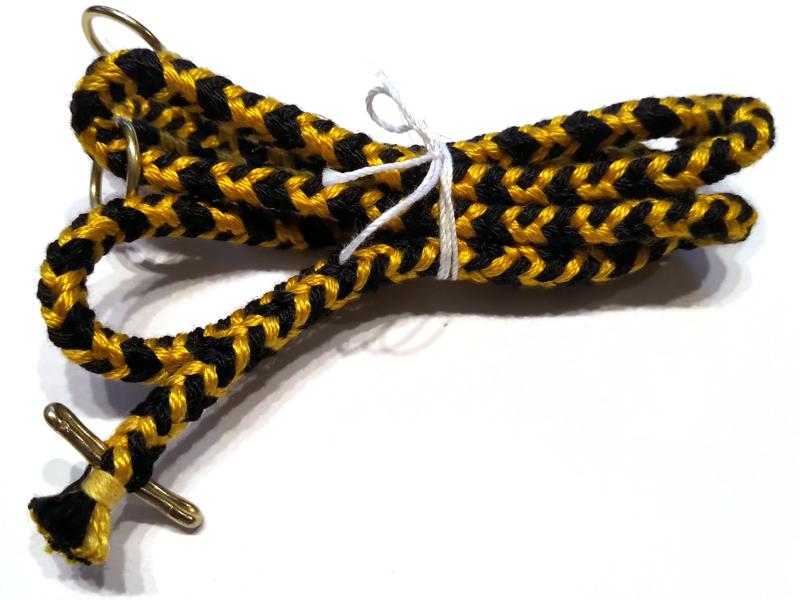
It’s just an 8-strand square braid in black and gold silk lace-weight yarn, eight plies of yarn per tama, about a yard long ( as are most of my medallion cord braids).
My sweetie became my lovely wife exactly 11 years ago.

We’re still married, and still pretty happy about that. We’ve been together for a few minutes more than 24 years.
What albums did I acquire in 2019?
A pretty big year for my music collection, actually. I was employed for ten months out of twelve, which tends to make me feel well-funded and in a mood to support the artists I love.
Most years, I try to make one of my holiday gifts for Sharon be something that I made myself. This year, I decided sort of at the last minute that it would be a knock-off of a garment she bought for herself earlier this year. She bought a kind of smock / poncho garment, and it has become one of her favorite things. It’s a good thing to throw on as an extra layer for warmth, and it adds a couple of handy pockets. The catalog she got it from only offers a couple of colors, and she bought the one she liked. If she was going to have another one, it would have to be hand made.
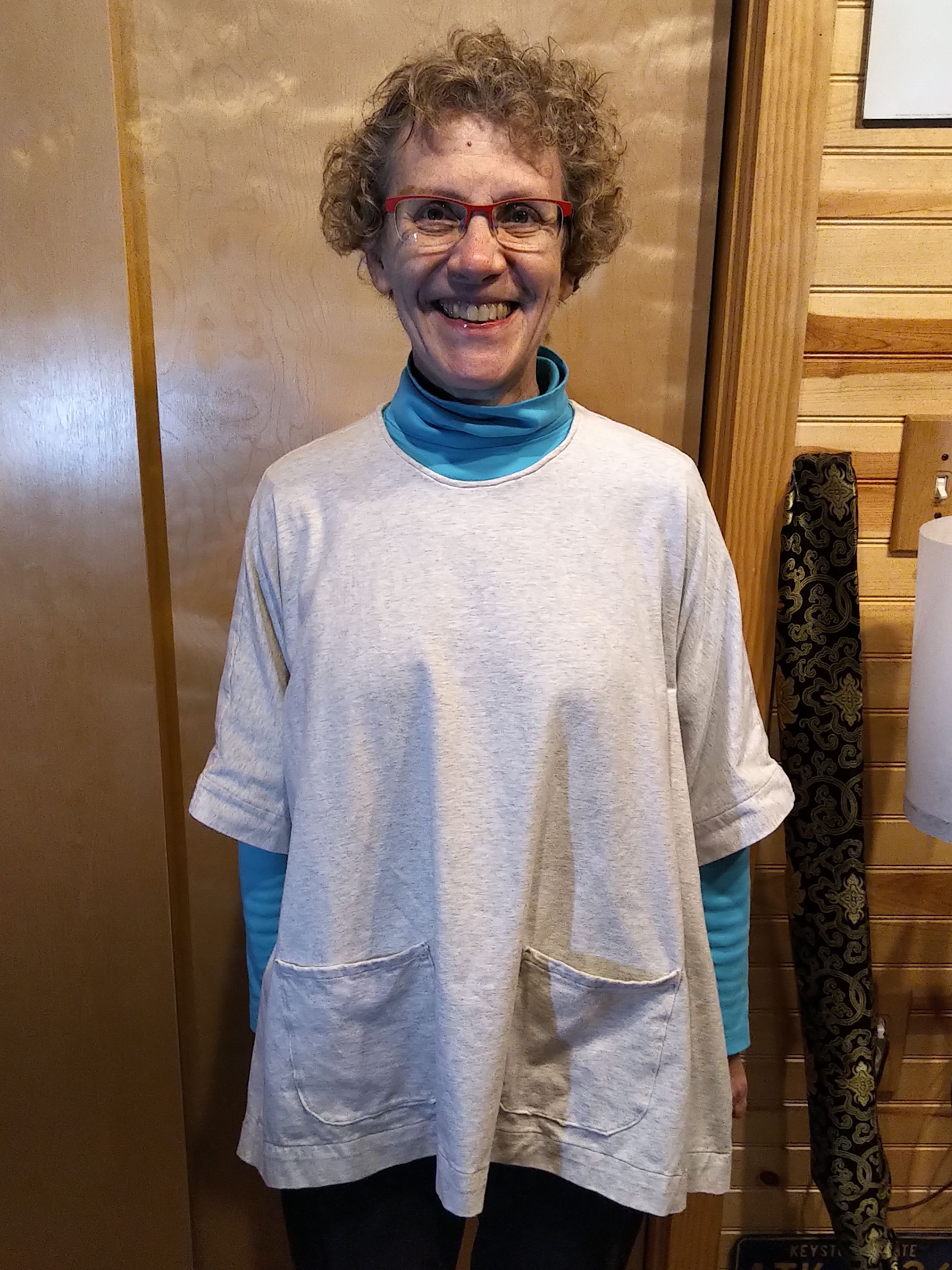
The fabric is a light gray mostly cotton stretch knit. Don’t underestimate the comlexity of this garment. The shoulders actually slope down from the neckhole, and the sides taper in towards the bottom hem. The hems have narrow turn-unders, and mitered corners. The pockets have rounded bottom corners. The neck hole has a narrow facing band. I have done almost no work with this kind of stretch knit fabric before.
Anyway, it took me a few days to get everything laid out, cut out, lanned out, and sewn. It was finished in time for the holiday, but still had chalk marks all over it so it had to be washed before it could be worn. Sharon sent all day yesterday wearing it, and found it to be as comfortable as the original, so success.
I’ve been wearing a lot of green lately. Green goes pretty well with blue, and most of my pants are blue jeans. Blue shirts are sometimes a little matchy-matchy with blue jeans, and green can be part of a black shoes outfit or a brown shoes outfit. I don’t like wearing black or gray shirts with brown shoes, so green is a good versatile color for different outfits. Anyway, I was shopping for fabric and saw this great green flannel.
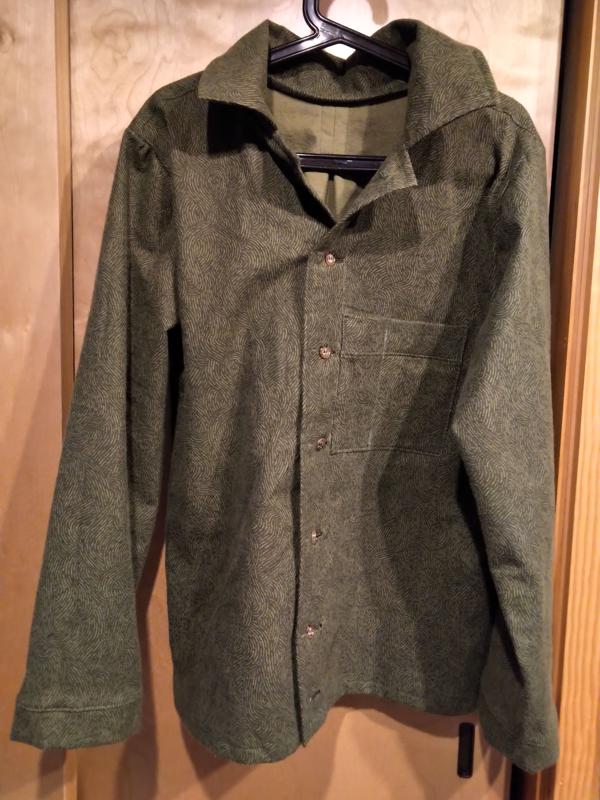
The pattern is the old pyjama top pattern, which is now Dana Marie Design Co. #1033, “Night and Day“. I still love this pattern for big comfy shirts. I don’t put the decorative trim on the pocket or cuffs. I added a vertical line of stitching that separates the pocket and makes it less likely that my phone will fall out. I just got those buttons at the fabric store today, so I could finish this project. I tried out some fancy buttonhole stitching, but you can’t really tell in this images.
My days are nothing but free time lately, but holidays doubly so. I’ve spent most of the last few days sewing on different projects, but nothing I can post about quite yet. I sewed a present for Sharon, but I didn’t get a chance to launder it so it’s covered in tailor’s chalk markings and needs a few touch-up stitches here and there. I sewed a flannel shirt for myself, but it needs a trip to the fabric store for buttons before it can be completed, and I’m not sure I want to go to retail-ville on Boxing Day. It’s all about stymied ambition, isn’t it? Anyway, hope you all got a chance to spend the day doing something you enjoy.
One of our favorite commercial sewing patterns is Folkwear #112 “Japanese Field Clothing“. I’ve used it for more than a dozen items of informal garb, and Sharon has probably used it for more than two dozen items. Monpe are basically baggy sweatpants, much like very simple hakama with only four panels total. Hippari are simple shirts with an open front that ties closed, and small sleeves. Together, they make good “peasant garb” for Pennsic, or work clothing for other events during the year. In movies, you’ll often see these garments with multiple patches and fixes, giving you the impression that most people in medieval Japan would only have one set of clothing, and they would wear that for as long as humanly possible. Anyway, they’re a good thing to have available in the Japanese medieval garb wardrobe, even though the Folkwear pattern isn’t quite medieval. Here’s the set I made in 2019 to replace some stuff I made more than a dozen years ago that I just can’t wear anymore.
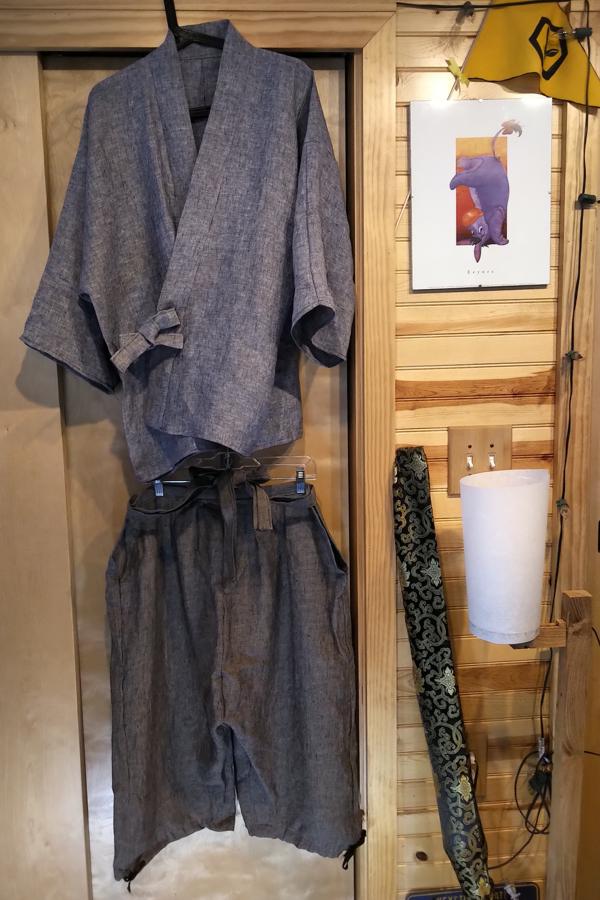
Both of these are made from linen fabric that I bought at the fabric store. The weave on both of these is a simple weave with color threads in one direction and white threads in the other. This gives the fabric sort of a homespun appearance, in my opinion. Anyway, these two items look pretty good together.