

bookmark_borderFriday Catblogging

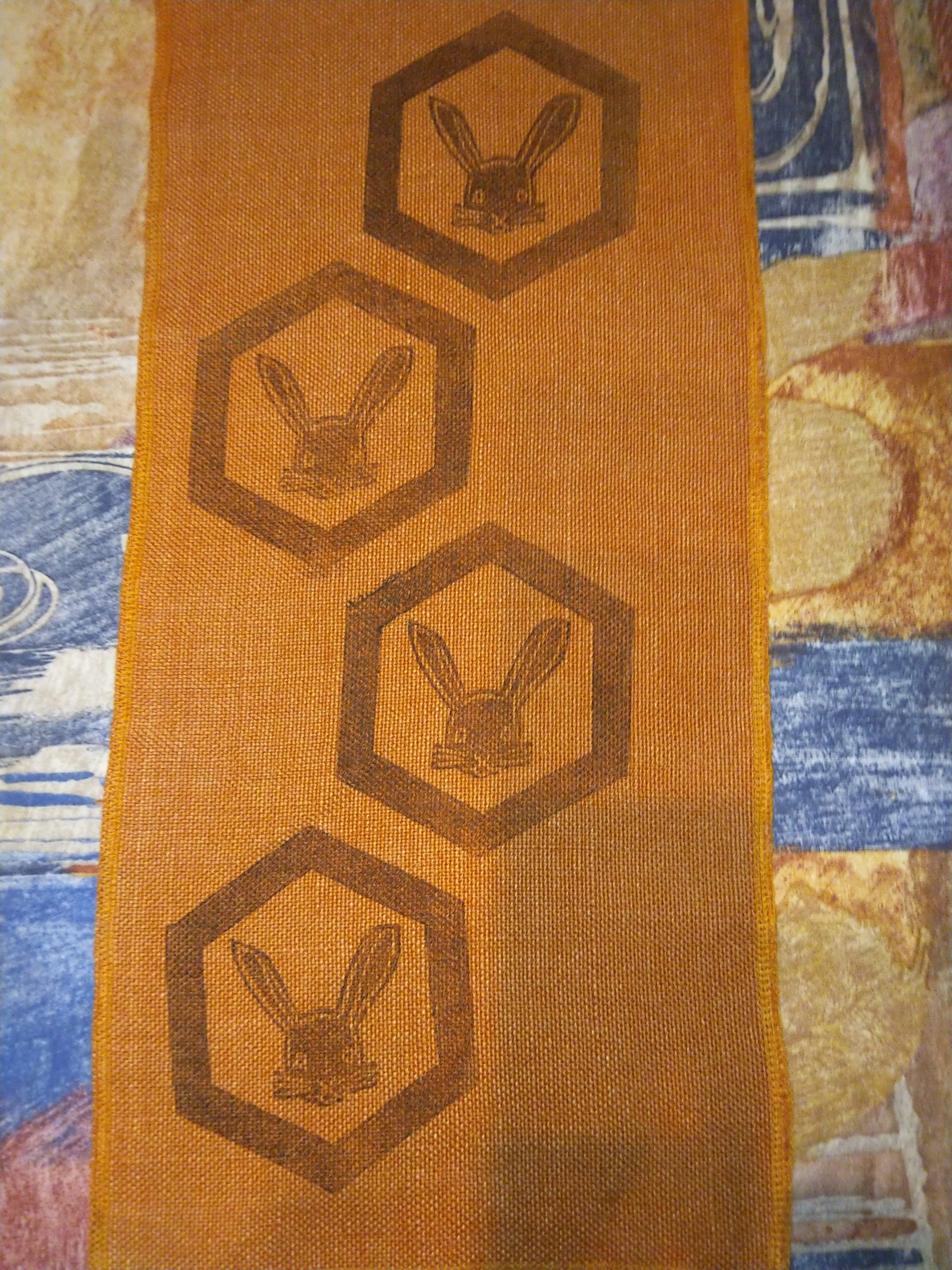
Recent experiments applying the mon of Clan Yama Kaminari to fabric have demonstrated to me that I am most happy with machine embroidered versions. They are durable, attractive, and can be made by a robot. This last is handiest because I want to embark on a project to make probably several dozen of these so that when we do something like march in a festival parade or rocess into court as a group, we can have a uniform look. Here are two prototypes I made over the last few days.
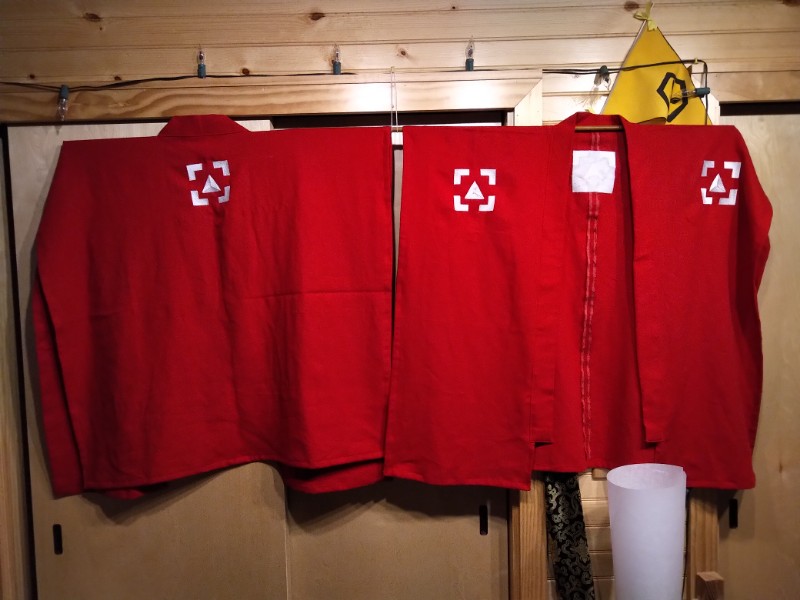
Even with a robot to do all of the embellishment work, it’s still labor intensive to get the fabric loaded onto the machine just right to get good results exactly where you want them. It also takes about ten minutes to complete each mon, so that’s going to be a lot of time if we make a whole bunch of these.
When you are recognized for your achievements in the SCA, you are typically inducted into an order, and you receive both a scroll and a piece of regalia. Usually, the regalia is a medallion or belt favor that displays the heraldry of the order. Making belt favors is one of the main uses to which I put my embroidery machine. I’ve designed stitch patterns for most of the kingdom orders, and try to set aside some time and resources each year to make some for donation.

New for this batch is the Gage. The symbol of this order is actually a black glove, and the regalia given is often an actual glove, but I figured someone might prefer a belt favor.
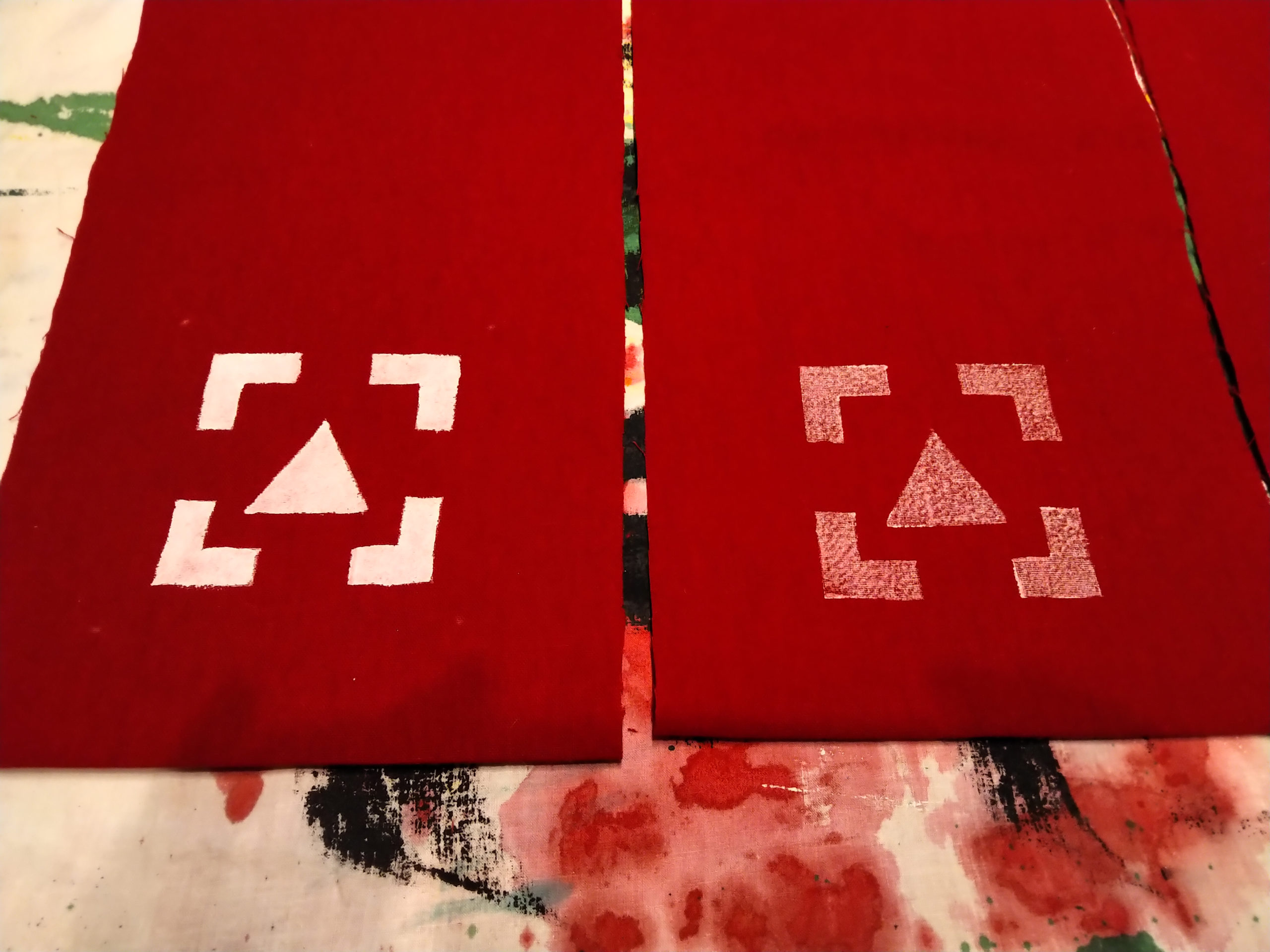
Here’s my new embroidery pattern for the mon (mark) of Clan Yama Kaminari.

This is just a test run on cheap fabric, but I think it came out ok. The new stitch pattern is a bit larger than the old one, 3.75 inches square.
Between hand-painted fabric and block-printed fabric.
I just completed this shogi folding stool that uses a new design. Instead of the ends of the legs fitting into slots in the feet (like in the old design), the legs are joined to the feet using wedged through-tenons with shoulders that curve up around the feet. I also used a new method of sewing the fabric of the seat so that stress on the stitches is lateral instead of longitudinal.

The frame is made almost entirely from red oak planks and dowels. You can just about see the walnut wedges that secure the tenons in the mortises. There’s also a respectable amount of glue and filler, but that can be our secret. The hinge axles are brass-plated hinge pins that I custom cut to length and cross drilled to accept brass cotter pins.
I like this design for the shogi because it is more properly medieval, even though I used even more modern machine tools to make it than before. I used a table saw to cut the legs and dowels, and to cut the joinery I used a drill press, band saw, and mortising machine.
I want to make a daimon hitatare to imitate one that I saw in a scroll. This will be so awesome, but I need a way to print my badge (which is a graphical device registered with the SCA’s College of Arms) dozens of times on the fabric I bought for this project. After months of noodling on the idea, and about a week of carving and re-carving, here is the block itself, ready for block printing.
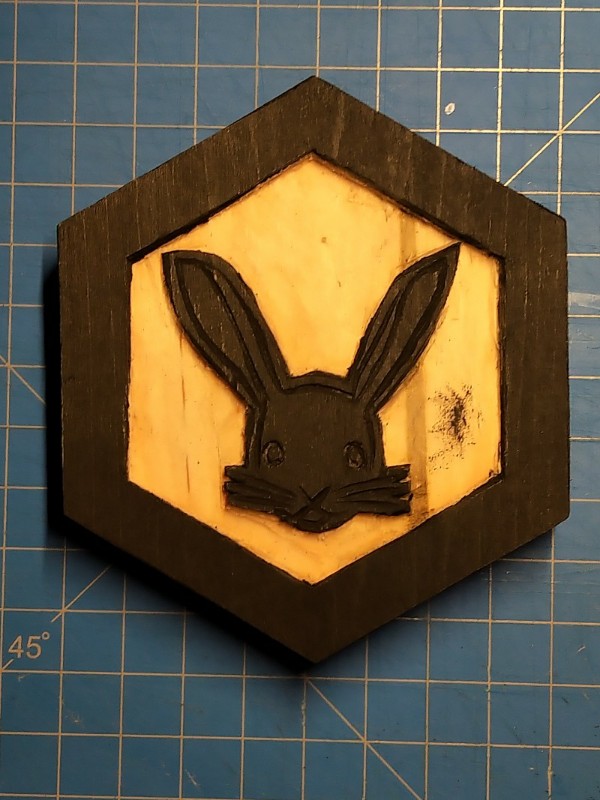
I’ve tried it out on some crap fabric, and I’m pretty happy with the results of my tests. next up is to start cutting fabric into panels, and start printing with blocks. It’s interesting that although some paint does get into the detail grooves of the craving, that ink doesn’t reach the fabric.
I’ve been doing all thus work in Mr. Arimoto’s shop, and a little work in my own shop, and getting pretty tired of filling up all my regular clothes with sawdust. A woodworking blog I read started selling some nice looking shop coats, but they were a little pricey for my tastes. What the heck, I can sew.
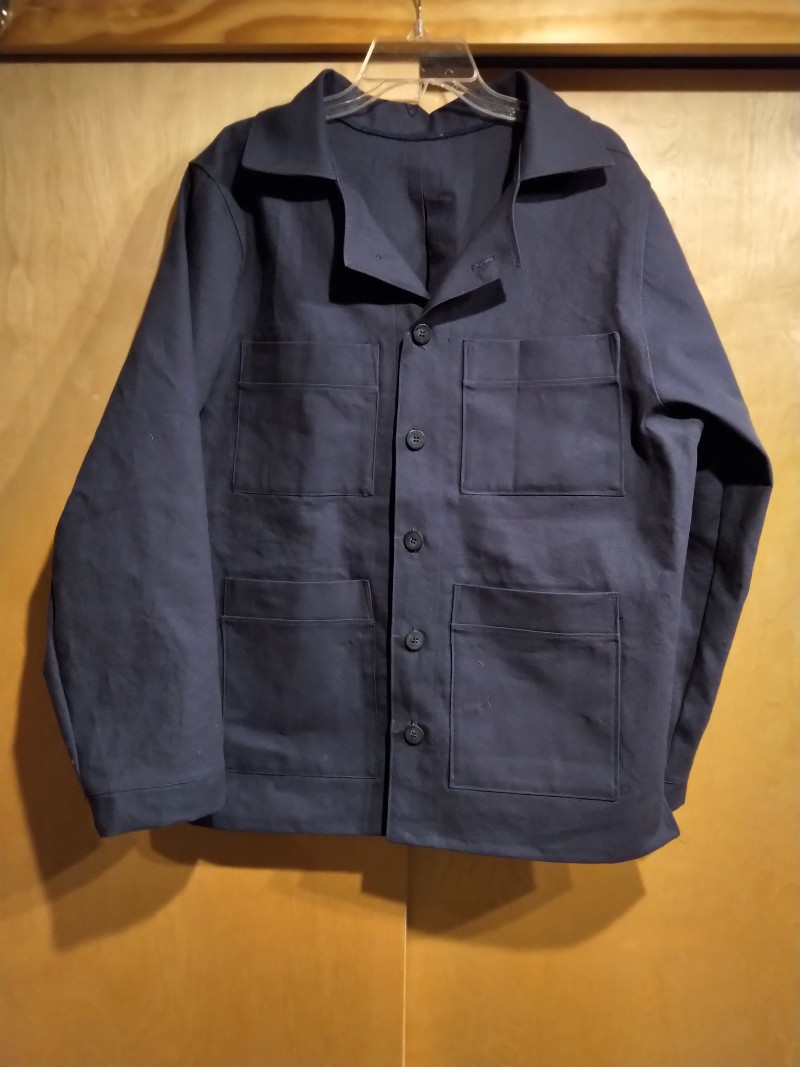
It’s just another iteration on the venerable pajama pattern, just in heavier fabric with a few extra pockets to hold tools and wood chips.