bookmark_borderSuprematist Composition #01

Suprematism was an early twentieth century art movement that started in post-revolutionary Russia, and embodied the idea that humanity had to free itself from the past and move boldly into the future with new concepts of everything, including art. My personal attachment to Suprematism dates back just a few years to when my Aunt found a book about the city of Vitebsk.

In the early Soviet era, Vitebsk became a city-wide art colony. The Suprematist school was one of the largest and most influential schools of art in Vitebsk at that time. On one page of the book, there is a full-page photo of a delegation of artists from Vitebsk who are traveling to Moscow to lobby the government for increased arts funding. Right in the front of the crowd is a person who looks like he is a relative of mine, and the caption of the photo identifies him as having the same family name as my maternal grandmother. My guess is that he was probably a cousin of hers.

So anyway, that is the origin of my preoccupation with the Suprematist movement. There is way more to know about Suprematism than I am willing to include in this post. The nutshell version is that the Suprematists believed in the supremacy of geometric forms and subjective emotion over the functional objectivity of representational art. The most iconic painting is by Kazimir Malevich the founder of the Suprematist school, and it shows a large black square occupying the center of a square white canvas.

A couple of weeks ago, my mind presented me with an image that I recognized as a Suprematist composition. This image popped up daily from then on. From previous experiences with this kind of mental obsession I knew that only bringing this urge to physical form would get it out of my head. Yesterday, I finally walked to the art store, bought a canvas, and made it into an actual painting.
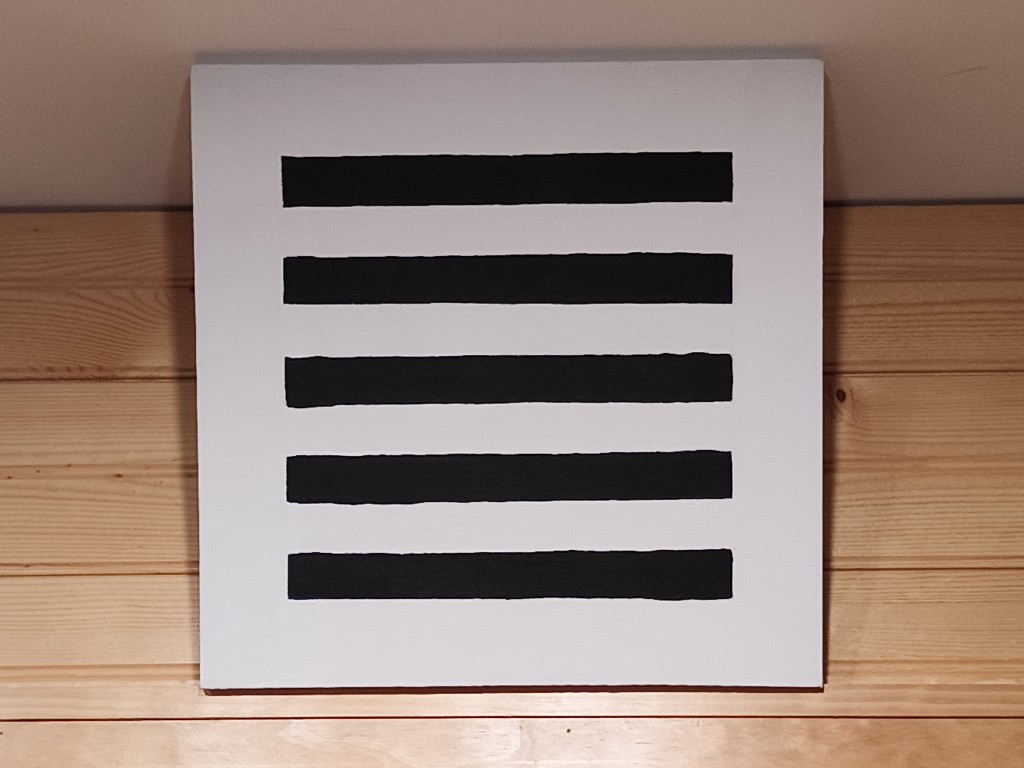
Five Black Bars (2026, Acrylic and Canvas, 14 in. by 14 in.)

There it is, displayed in my home office as Malevich displayed his painting Black Square. It is one of the few projects I have ever produced that is a genuine attempt at artistic expression. You are, of course, entitled to your own opinions on “modern art” or my own clumsy execution. The composition was laid out by hand with ruler and pencil, and the paint applied to canvas by hand with brushes. This is not a joke of any kind. This composition has meaning to me, and this work has personal resonance.

A common criticism of abstract art is, “A child could have done this.” In this case at least I disagree. Not only was this work technically difficult to compose (Can you divide ten by nine using a ruler?) it relied on lengthy experience with brushes and paint to execute. A child who could do this should be sent to art school, engineering school, or both. Another criticism is, “I could have done this.” Again I disagree, because you did not. You did not have the combination of knowledge, emotion, history, experience, and desire that demanded the creation of this painting. If you have the basic skills necessary to replicate this painting (and I have no doubt that many of you who bother to read this far can exceed any rudimentary skills I have with paint) then by all means do so. If my painting inspires you to make your own painting in response, then I encourage — actually, I demand — that you do so. Even if your painting looks just like mine it will still be yours. Your painting will not be my painting.

I look forward to seeing your painting.
bookmark_borderMoon Rabbit Kosode

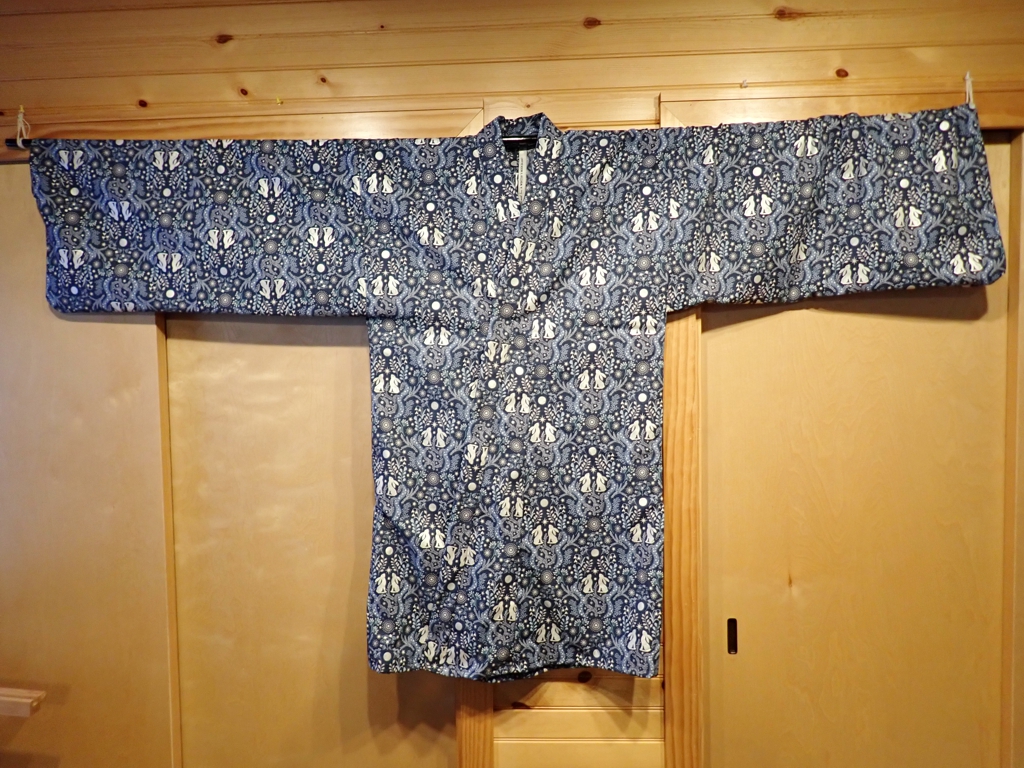
I finished this kosode back in February, but for some reason I never posted about it here. When we were vacationing to visit family at the end of last year, I found a friendly local fabric store that stocked a bunch of cute cotton prints and other attractive fabrics. They had some nice octopus print cotton, but I decided to get this sweet little moon bunny print.

Kosode from blue “Moon Bunny” cotton print fabric

The design of this kosode is not very period, and the fabric is completely modern, but sometimes I just want something fun to wear, and not everything has to be a formal project. One difference from period design that you may notice is the double-length sleeves. I did make an effort to do the overlaps according to the currently accepted pattern, but you’d have to know what you are looking for to even notice that.

bookmark_borderRecent Spectral Braids

Given all of the “rainbowbraids I have done in the past year, and how the colors for our local SCA Barony are black and gold (just like Pittsburgh), we were beginning to run low on yellow cotton crochet thread. Normally, I would pop over to one of the local JoAnn Fabrics locations, but RIP JoFab. I hate mail ordering something I could just buy in a store, so I held my nose and went over to the closest Michaels. They actually had one package of the Aunt Lydia’s Classic 10 in yellow. It wasn’t the yellow I wanted (I prefer the deeper, more golden yellow to the more pastel yellow.), but it was the same as what we had a bit left of, so that was OK.

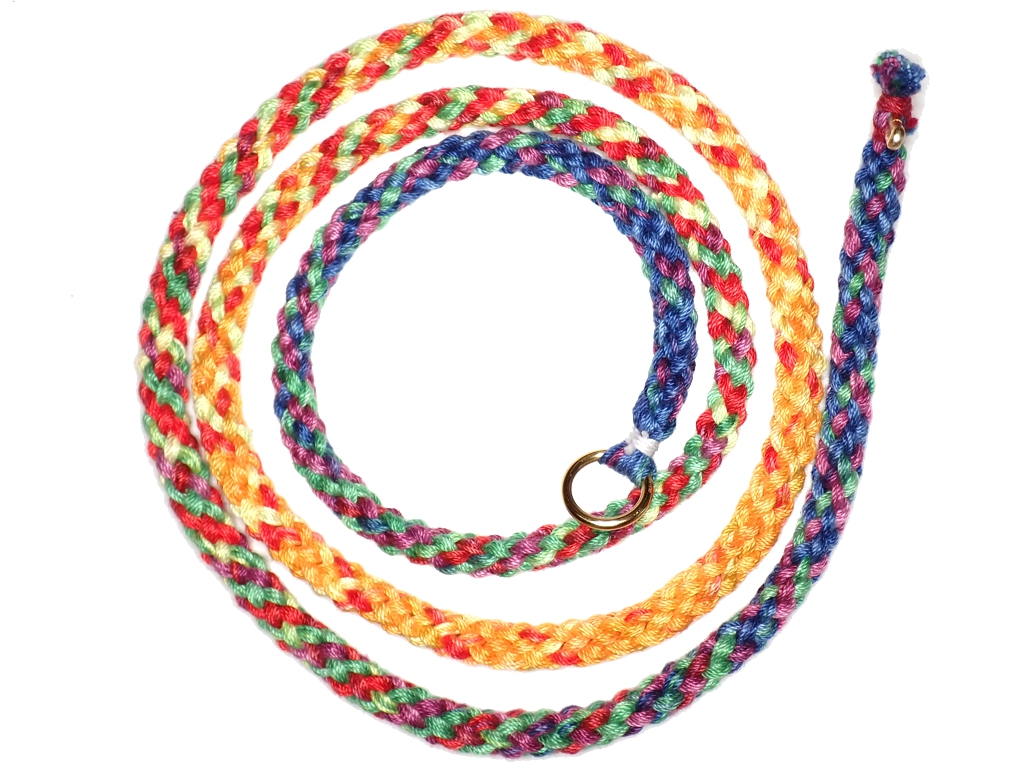
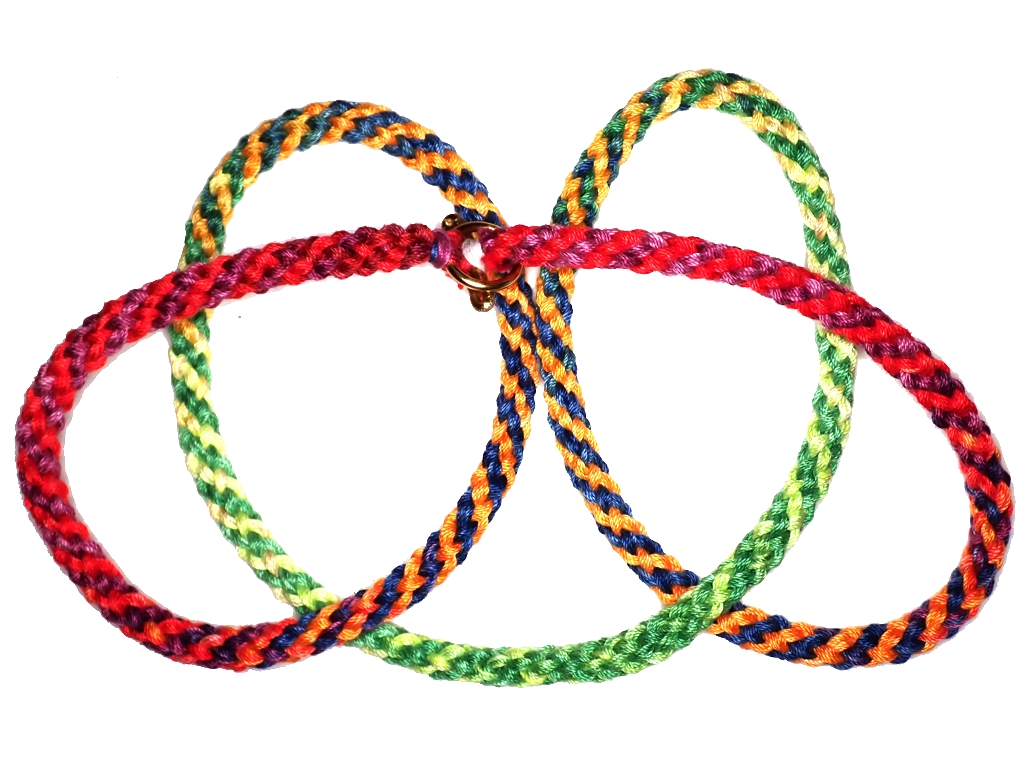
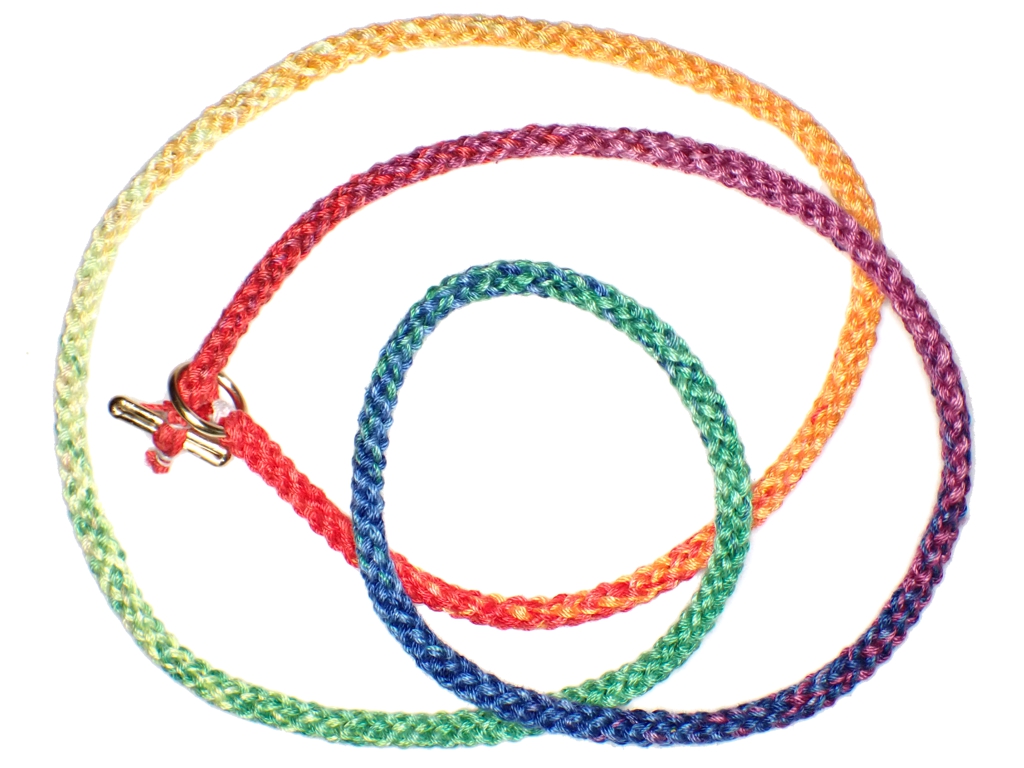
They also had some of the rainbow variegated thread, so on a whim I bought some and tried to measure out some warps that matched the progression of colors across the plies in each strand. Then I braided the edo yatsu gumi with each to see what effects I could create.

Edo Yatsu braid in Variegated Cotton

The first try I didn’t get the length of the warps quite right. Plus, because of the way the yarn is wrapped back and forth between the warping pegs, half the warps have the color progression reversed. Still an interesting braid.

Edo Yatsu braid in Variegated Cotton

On m second try, I got the warps about as close to perfect as I can imagine. Still, because of the reversed warps the spirals cancel out in the middle and it’s an almost solid green.

Edo Yatsu braid in Variegated Cotton

Finally, I gave in and cut the warps, matching them end for end. I still used the same edo yatsu braid as the first two, but I only used 6 plies of cotton per strand instead of 8. This results in a slightly thinner braid, and the color matching provides a much smoother fade from color to color down the braid. I really like this one.

I’ve done so many longer and more complex braids lately that I have almost forgotten how much fun it can be to quickly warp up a shorter, simpler braid and have a completed cord in an hour or so.

bookmark_borderTwo-color Sankakudai Braid

I still had a lot of burgundy and gray crochet cotton tripled up on my kowaku spools since last year. I was measuring out a lot of material for my class at the Braids 2025 conference in Cleveland, and it’s just been occupying the spools since then. I decided to use up as much of it as I could and make a nice, long shigeuchi braid on my sankakudai.

The final braid is about 9.5 feet long between the bindings and not quite a half inch wide. Each strand of this 9-strand braid has 6 ends of cotton crochet thread, and I started with 13 feet of material. So, about 27% uptake. The next sankakudai braid will be a sageo cord in dark blue silk, so these calculations are fairly important. I’m aiming for about 9 feet long.